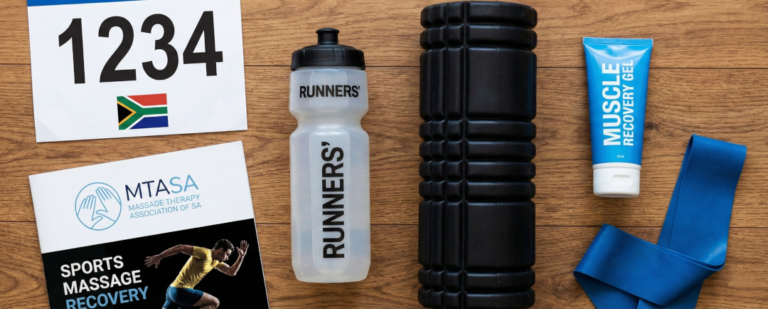
In South Africa, we are a nation of movers. On any given Saturday morning, our roads are full of cyclists training for the Cycle Tour, our streets are packed with Park Runners, and our school fields are busy with rugby tackles and netball drills.
But there is a hidden cost to this active lifestyle. We often train like professionals but recover like amateurs.
The “Weekend Warrior” mentality—smashing a 100km cycle on Sunday and sitting at a desk for 8 hours on Monday—is a recipe for injury. This is where Therapeutic Sports Massage becomes your secret weapon.
It’s not just for the elite gold medalists; it’s for anyone who wants to keep moving without pain.
Professional athletes have entire teams dedicated to their recovery. The average South African amateur athlete has… a foam roller and a tube of Deep Heat.
When you combine high-intensity training with the stress of a full-time job and a sedentary office posture, your muscles never truly get the signal to “switch off” and repair. This leads to the Cumulative Injury Cycle:
Micro-tears occur during training (normal).
Without recovery, tissue heals poorly, forming sticky “adhesions” (knots).
The muscle becomes shorter and less elastic.
Eventually, you pull a hamstring or develop tendonitis.
A registered Therapeutic Massage Therapist breaks this cycle before it becomes an injury.
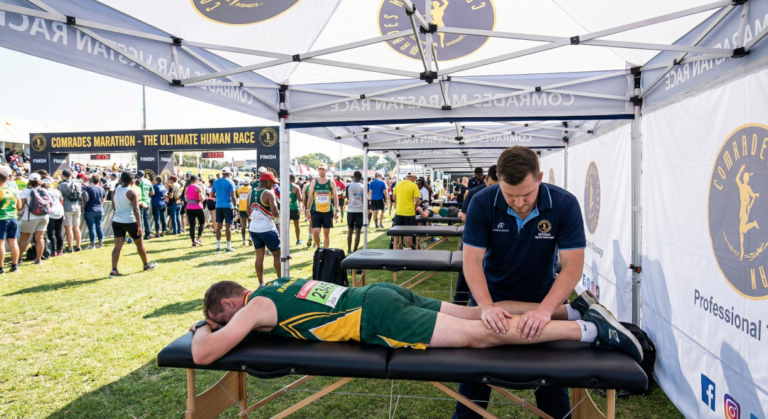
Not all sports massages are the same. A qualified therapist knows that what you need before the Comrades Marathon is the complete opposite of what you need after it.
When: 3–5 days before a big race or match.
Goal: To stimulate blood flow and ensure muscles are loose and responsive.
Technique: Brisk, rhythmic strokes. We avoid deep tissue work here to prevent soreness on race day.
When: 24–48 hours after the event.
Goal: To flush out metabolic waste (lactic acid) and reduce DOMS (Delayed Onset Muscle Soreness).
Technique: Slow, lymphatic drainage techniques and gentle stretching to calm the nervous system and encourage fresh blood flow to damaged tissue.
 South African school sports are intensely competitive. High-impact sports like rugby, netball, and hockey place immense strain on growing bodies.
Parents often rush their children to a physio after an injury happens. But integrating Therapeutic Massage into a young athlete’s routine can prevent the injury entirely.
Growth Spurts: Tight muscles pulling on growing bones can cause conditions like Osgood-Schlatter disease (knee pain). Massage helps maintain muscle length during these growth phases.
Postural Awareness: It teaches young athletes to be aware of their body mechanics early on.
There is a big difference between a “sports massage” at a gym and a treatment from an AHPCSA-registered therapist.
A registered therapist understands Sports Pathology. We don’t just rub where it hurts.
If you have Runner’s Knee, we know to treat the ITB and glutes, not just the knee.
If you have Tennis Elbow, we know to treat the forearm extensors and shoulder mechanics.
We can identify when a “niggle” is actually a tear requiring a specialist referral.
You invest in the best running shoes, the best bike, and the best coaching. Why neglect the engine that powers it all?
Recovery is the other half of training. Make it count.
Training for your next big event? Click here to search the MTASA Member Directory to find a therapist who specializes in sports recovery and injury prevention.