To understand who you should book with, you need to look at the goal of the session.
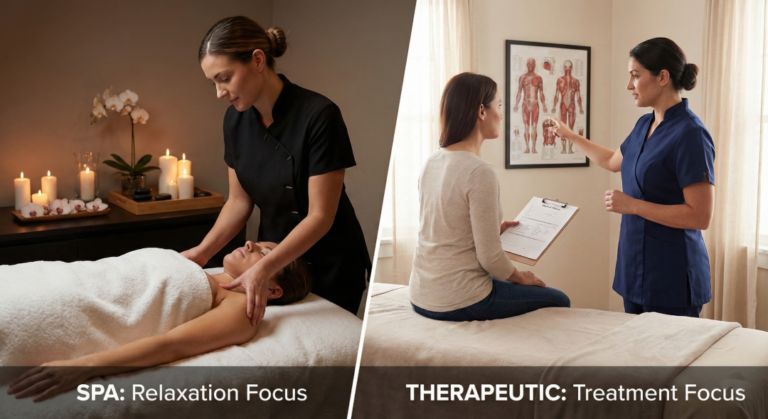
The Goal: Relaxation, stress reduction, and general pampering.
The Focus: The “experience.” The priority is making you feel comfortable, reducing mental stress, and providing a luxurious environment.
Best For: When you want to treat yourself, unwind after a long week, or enjoy a gift voucher.
The Goal: Treatment, rehabilitation, and functional improvement.
The Focus: The “outcome.” The priority is identifying the root cause of your pain (e.g., posture, injury, pathology) and treating it.
Best For: Chronic pain, sports injuries, post-operative recovery, headaches, and musculoskeletal conditions.
This is the most critical difference.
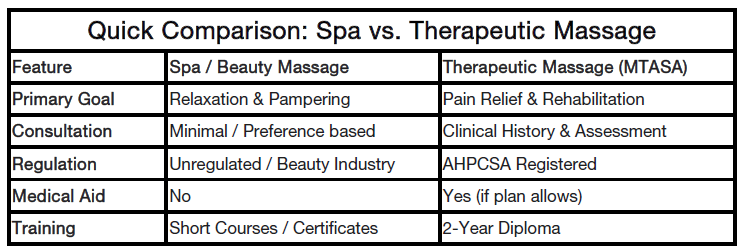
In South Africa, the barrier to entry for the beauty industry can be low. Some short courses allow someone to start massaging after just a few days of training.
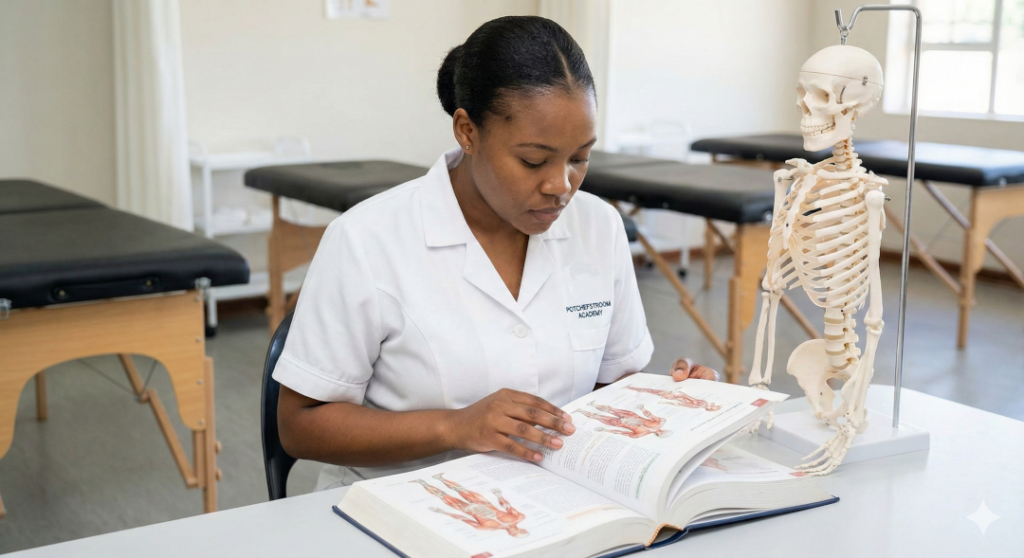
In contrast, a Therapeutic Massage Therapist registered with the AHPCSA (Allied Health Professions Council of South Africa) has undergone rigorous medical-based training.
Duration: Typically a 2-year Diploma.
Curriculum: In-depth Anatomy, Physiology, Pathology (the study of disease), and Pathophysiology.
Clinical Hours: Required hours of supervised clinical practice.
This training means an MTASA member knows exactly where the nerves are, how a specific muscle interacts with a joint, and most importantly, when NOT to massage (contraindications).
How do you know if you are in safe hands? If you are seeking medical relief for pain, watch out for these red flags:
No Intake Form: If a therapist touches you without asking for a medical history (medication, surgeries, allergies), they are putting you at risk. A Therapeutic Therapist always assesses you first.
“It’s Just a Knot”: If you ask why your shoulder hurts and the answer is vague, be cautious. A qualified therapist should be able to explain the anatomy: “Your upper trapezius is tight because your pectorals are pulling your shoulders forward.”
Miracle Cures: Be wary of anyone offering “curative” claims for serious diseases without evidence. Therapeutic Massage is a powerful healthcare tool, but it is evidence-based, not magic.
There is absolutely a place for spa days—we all need to relax! But when your body is sending you pain signals, you need more than just stress-relief; you need a healthcare professional.
Don’t gamble with your health. Ensure your therapist is qualified, trained, and accountable.
Ready to find a professional? Click here to find a verified, AHPCSA-registered Therapeutic Massage Therapist local to you.